Next.js App Router
Full-stack framework with server components, API routes, and streaming.
White-Label Licensing & SaaS Acquisition
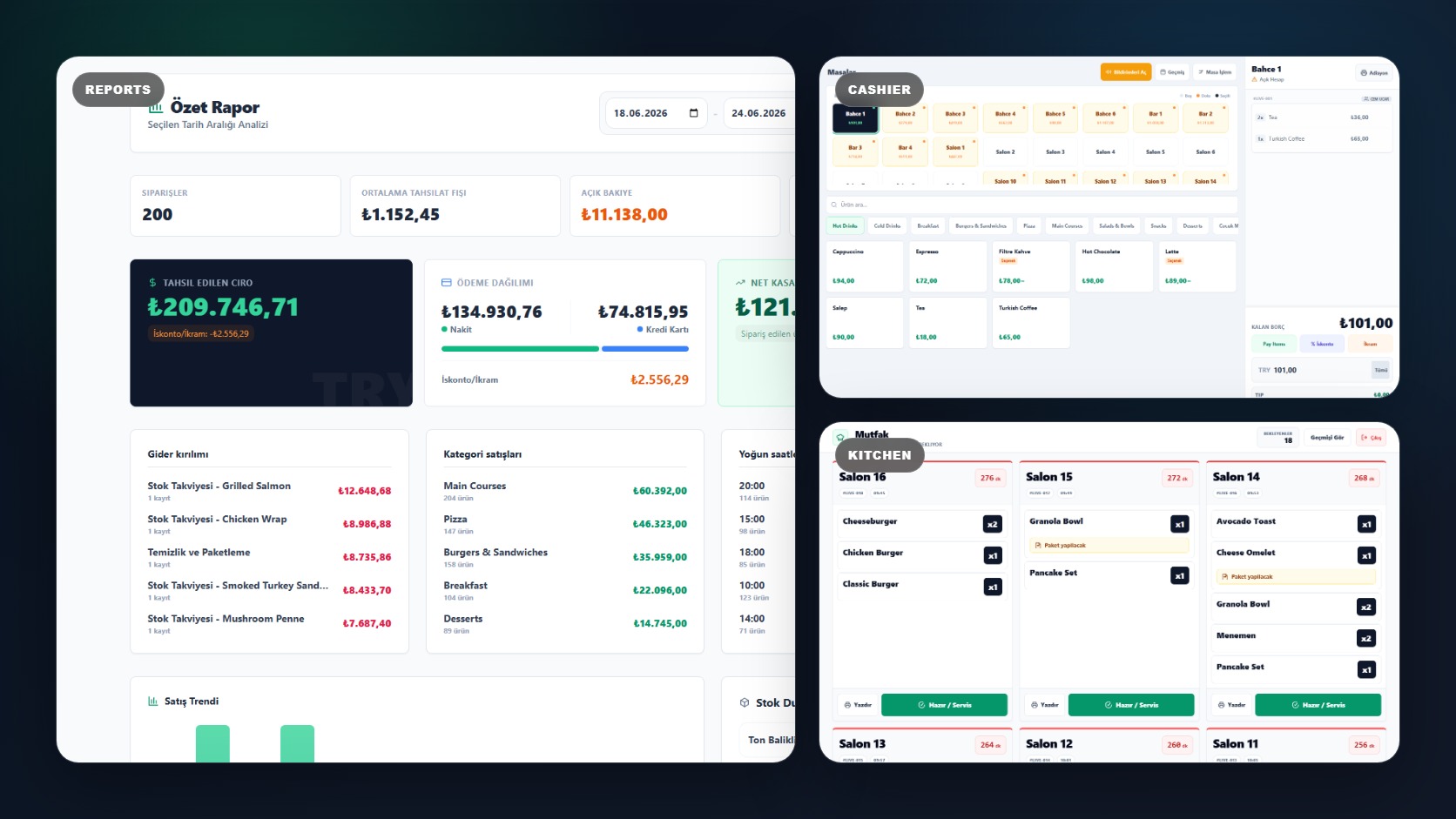
LiteMenu POS started from real restaurant workflow pressure and grew into a transferable, multi-tenant SaaS platform. This page is intended for agencies, white-label resellers, and technical acquirers who want to understand the asset before requesting private diligence details.
Multi
tenant SaaS
Restaurant data is row-scoped by tenantId.
E2E
regression suite
Orders, payments, stock, tenant isolation, branding, and print flows.
Runtime
brand control
App name, logo, support, manifest, package scope, and commissions.
Technical stack
The architecture favours a buyer or agency who wants to understand and operate the product quickly. Current production baseline is a single application instance backed by PostgreSQL; limits requiring future infrastructure are disclosed plainly.
Full-stack framework with server components, API routes, and streaming.
End-to-end type safety across the application and Prisma schema.
Type-safe database client with migrations and multi-tenant schema design.
Primary relational database; all tenant data is row-scoped by tenantId.
Session management with role-based access control across all surfaces.
Subscription billing and per-transaction application fees for QR payments.
Containerised deployment baseline with TLS termination and reverse proxy.
E2E regression suite covering critical order, payment, stock, and tenant flows.
Unsigned Windows Setup.exe for Windows driver/spooler and network ESC/POS printers, plus debug-signed Android QA APK for network ESC/POS and selected paired Bluetooth Classic printers.
Regression coverage
Playwright tests run against a deterministic QA tenant with real NextAuth sessions and Prisma DB assertions. The suite focuses on flows where a silent failure would cause real operational or financial damage.
White-label capabilities
The platform is built from the ground up for white-label operation. A superadmin can control all tenant branding, package scopes, and platform settings at runtime — without redeploying code.
App name, short name, logo URL, support email, theme colours, and app description are all DB-backed and hot-swappable via the superadmin panel.
Superadmin assigns STARTER, PRO, or ENTERPRISE packages to each tenant, gating QR ordering, kitchen display, print agent, advanced reports, and payment eligibility.
Default Stripe Connect application fee rates (per plan) can be overridden at the tenant level for custom commercial agreements.
Create, suspend, or remove tenants. Set slug-based public menu URLs. Control QR payment eligibility per tenant.
Superadmin surfaces include audit logs and platform health history for operational oversight.
The platform manifest, icons, and PWA metadata pull from DB brand config so each white-label deployment can present as a distinct product.
Platform control center
The superadmin surface gives the platform owner full control over the SaaS business layer — tenant lifecycle, package scopes, brand settings, commission rates, and audit history.
Tenant lifecycle (create, suspend, remove)
Package scope assignment per tenant
QR payment eligibility control
Commission rate overrides
Runtime brand & manifest settings
Audit and platform health history
Revenue model
The business model is intentionally straightforward. No unverified ARR, MRR, or customer-count claims are made here — revenue mechanics are clear while unproven financial figures stay out of public copy until supporting data can be shared in private diligence.
STARTER ($19/mo), PRO ($49/mo), and ENTERPRISE ($99/mo) plans gate features including QR ordering, kitchen display, print agent, advanced reports, and QR payments.
Stripe Connect scaffolding supports platform-level application fees per transaction. Default rates: STARTER 5%, PRO 3%, ENTERPRISE 1.5% — all overrideable per tenant.
Runtime brand settings and language support make operator-led resale or regional market deployment practical for agencies and SaaS resellers.
STARTER
5%
Entry plan default QR payment commission
PRO
3%
Lower fee for higher-scope venues
ENTERPRISE
1.5%
Lowest default fee for full-scope operators
Known boundaries
A premium asset page should not hide its edges. These limits are framed as controlled operating assumptions so acquirers and partners can price the opportunity instead of discovering them late.
Horizontal scaling requires Redis-backed rate limits and polling coordination before multi-instance production use. The current baseline runs reliably on a single app instance.
Sales demos and controlled POS/manual-payment pilots are ready. QR card payments require a charge-enabled Stripe Connect tenant, live-URL test-mode checkout, and DB assertion validation before pilot use.
The hosted demo has verified backup and database restore proof. Broader self-serve production still needs monitoring, off-host backup, deploy automation, and Docker cleanup hardening.
Stripe products, price IDs, Connect accounts, charge-enabled status, and webhook endpoints must be configured and tested by the new operator before enabling QR card payments.
Custom domains are intentionally outside the current runtime scope to reduce DNS and SSL support complexity. Public menus are served under tenant slugs.
Implemented and tested paths are Windows driver/spooler printing, USB thermal printers after driver installation on Windows, network ESC/POS printing with static IP and port 9100, and Android selected paired Bluetooth Classic SPP printing. The current Windows Setup.exe is unsigned and can trigger SmartScreen until the buyer signs it. Play Store distribution, release signing, MSI/GPO distribution, BLE, raw driverless USB, Android USB OTG, serial, fiscal/mali printers, vendor SDK printing, label printers, and auto-update remain future scope items.
Acquisition package
Private handoff details — repository access, Stripe credentials, financial data, and full deployment docs — are available on request after initial screening.
Full Next.js application source package and supporting services
Docker, PostgreSQL, Nginx, and Let's Encrypt deployment baseline
Stripe billing and Stripe Connect scaffolding for subscriptions and QR card payments
Windows Setup.exe and Android QA APK print connectors with pairing, tenant-scoped queue claiming, driver diagnostics, ESC/POS settings, and device-key rotation
Playwright regression coverage for critical order, payment, stock, tenant, branding, entitlement, and print flows
Seed data, demo assets, buyer documentation, handoff notes, and known-limit disclosures
Superadmin panel for tenant, package, branding, commission, and audit management
Add a deeper POS and QR ordering workflow to an existing local sales motion or service portfolio.
Rebrand and deploy for restaurants, small chains, and regional hospitality groups under your own brand.
Take over a codebase with operational surface area, E2E test coverage, and a clear improvement backlog.